
A Second Life
Tracey Emin and witnessing.

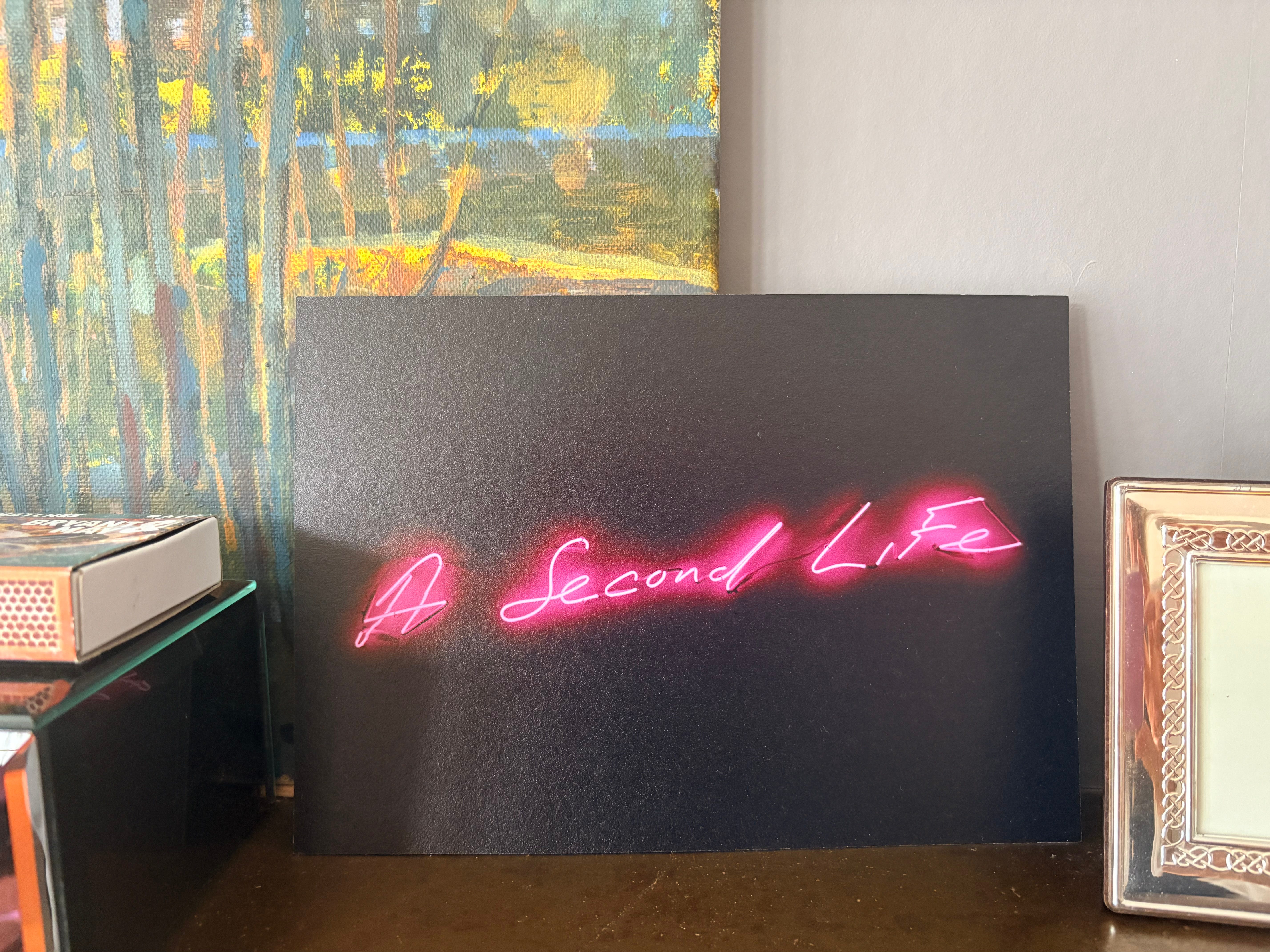
No, not reincarnation; I’m thinking about the privilege of being able to leave behind a way of living and start something new.
I’ve deleted the instagram app, but still log in for work related purposes and, oh, that pull of scroll-dopamine lures you back in. So I know that there are still plenty of accounts along the lines of we bought a cabin in the woods/old van/small island, follow along as we explore our off grid/nomadic/home schooling life. Spoiler alert, you don’t have to go to such lengths - the right therapy at the right time can also be a turning point and the start of something new.
Our understanding of the world and our place in it is formed by our earliest relationships, but also a mixture of environment, experience and a dollop of inherited beliefs, usually things we’ve been told about ourselves. They coalesce together, and form a backdrop to our lives. In therapy, we can start to pull on the threads, untangle the whole thing and lay the bits out to be examined. Some of these parts we might previously have accepted as givens, can be questioned and interrogated; we can decide how we feel about them, embrace them if it feels right jettison them if they turn out not to serve us. A therapist can ask questions you do not have, make links you cannot see, and bear witness to your story. To have this reflected back will enhance your understanding of yourself, not always comfortably.
Tracey Emin’s exhibition, A Second Life, (Tate Modern) unravels the threads of her own being, in characteristic messy provocative works. It’s all there, abuse abortion, cancer, nothing censored, nothing sanitised, just as in therapy. Eddy Frankel’s review in The Guardian said I was a teary wreck, it was overwhelming.
I left feeling as if I had been in a session, and reminded of how it feels to go on such an exploration with the people I work with.
I don’t know if Emin has a relationship with therapy, or if for her, the act of creation out of the unravelling is enough. But if so I began to wonder about what happens when that journey is taken alone and without the reflection back from an other. I understand her drive to photograph her bleeding stoma; that level of confrontation with what is happening to a body, unexpectedly and unbidden as a way of gaining some level of understanding or acceptance. But I don’t know that I could display it to the world in such a way. Is this brave, reckless or (cynically) a continuation of an unfiltered brand. But perhaps also, whenever we write our story without witness, we are working with a limited view.
Psychotherapists Tom Stone Carlson and David Epston have writen that a client’s thoughts, actions, aspirations and feelings are divided into at least two distinct versions, the problem’s story and it’s counter-story as told by the therapist.
That is to say, that when something is shared between two people, the thing itself is inevitably changed through that very reciprocity. The thoughts, curiosity, ideas and reflections of the therapist come to bear and there is a change. Often this is a reframing, but even if only a subtle difference of shade or nuance, there is a shift. And the shift brings light and understanding.
When any of us send our creative output into the world, we lose the right for it to be experienced in the way we meant it to be, because it will be seen by anyone who encounters it through their own filter. In therapy at least, this is a collaborative process.
A Second Life is a difficult view, it delves into the hardest parts of existence, but there is also something joyful about it’s reclaiming of a life lived hard. A determination to thrive and express, to feel and experience, to live outside of the parameters set by others, or circumstances.
I’m not familiar with the artist’s work so I’ll have to give it a look. But interestingly, I reflected on where you mention how we create our selves, our senses of who we are, and that includes things others tell us/have told us about ourselves. I find that as a parent of young adults, a fair bit of what I’m doing now is reflecting back to these young people things they know about themselves but might be temporarily overlooking. “What an opportunity for you. You’ve always been so xyz.” Or “that must be so frustrating. You value abc in friendships and this is not that.” - helping them see themselves. I’m very aware of the need to not overstep (and have the helpful reinforcement of each of my strong-willed young adult kids who say “no, that’s not how I am now…” or otherwise correct me if I get it wrong.) but also it seems an under-explored part of parenting young adults, the way we’re collaborators with them in their own creation/becoming. I also see how very easy it could be for parents to get entangled or to miss the point about how to support their young adult children without trying to helicopter parent them as they launch.